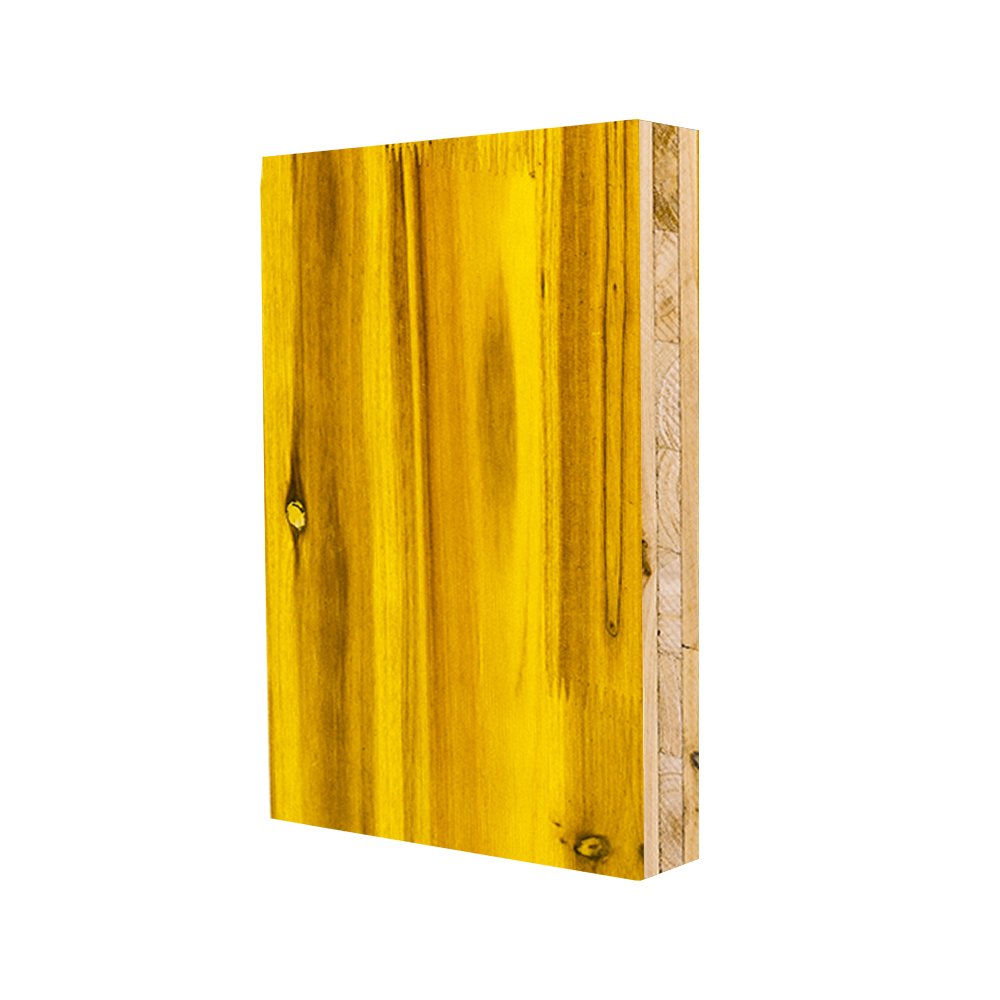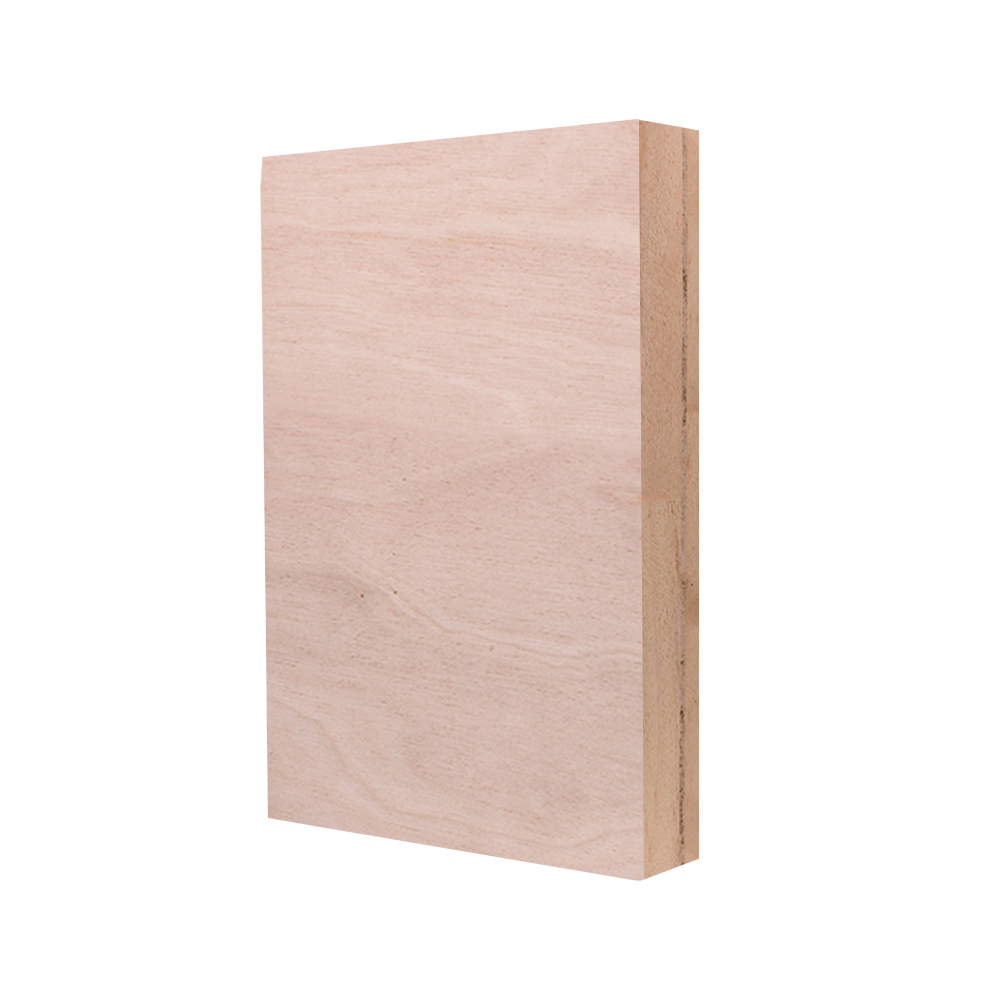

| Property | Blockboard | Plywood | MDF |
|---|---|---|---|
| Core build | Edge-glued wood strips 15-30 mm wide, faced both sides with veneer | Odd number of veneer layers, each rotated roughly 90 degrees | Defibrated wood fibre blended with resin and pressed into a homogeneous sheet |
| Grain direction | One dominant direction, along the strips | Balanced, cross-banded in two directions | None, uniform in all directions |
| Density | 450-650 kg/m3 | 600-750 kg/m3 for birch construction grades | 700-850 kg/m3 |
| Weight, 18 mm | About 10-12 kg/m2 | About 11-13 kg/m2 | About 13-15 kg/m2 |
| Screw holding, face | Good | Very good | Moderate |
| Screw holding, edge | Fair to good, splits without pre-drilling | Good, especially in multi-ply cores | Poor, needs inserts or dowels |
| 24-hour thickness swell | 3-8 percent | 2-6 percent, lower with phenolic glue | 10-20 percent in standard grades |
| Flatness over wide spans | Excellent, the reason it exists | Good, improves with ply count | Good until a moisture cycle intervenes |
| Machined profiles and mouldings | Poor, strips tear out | Fair, needs sharp tooling and climb cuts | Excellent, the best of the three |
| Painted finish | Fair, veneer joints can telegraph | Fair, face grain shows through thin coats | Excellent with a sanding sealer |
| Relative material cost per m3 | Mid | High | Low |
| Most common failure in service | Core void or face blister at a strip gap | Edge delamination where the panel was never sealed | Swelling at cut edges, then sag under sustained load |
The short answer sits in three lines. Blockboard owns wide, flat, lightly loaded panels such as wardrobe doors, cabinet backs and long shelving. Plywood owns anything that carries load, takes a fastener repeatedly, or meets moisture. MDF owns machined profiles, painted faces and budget-driven work that stays dry and stays indoors.
Everything after this point explains why those three lines hold, where they break, and what to write into a purchase order so the panel you receive behaves the way the sample behaved.
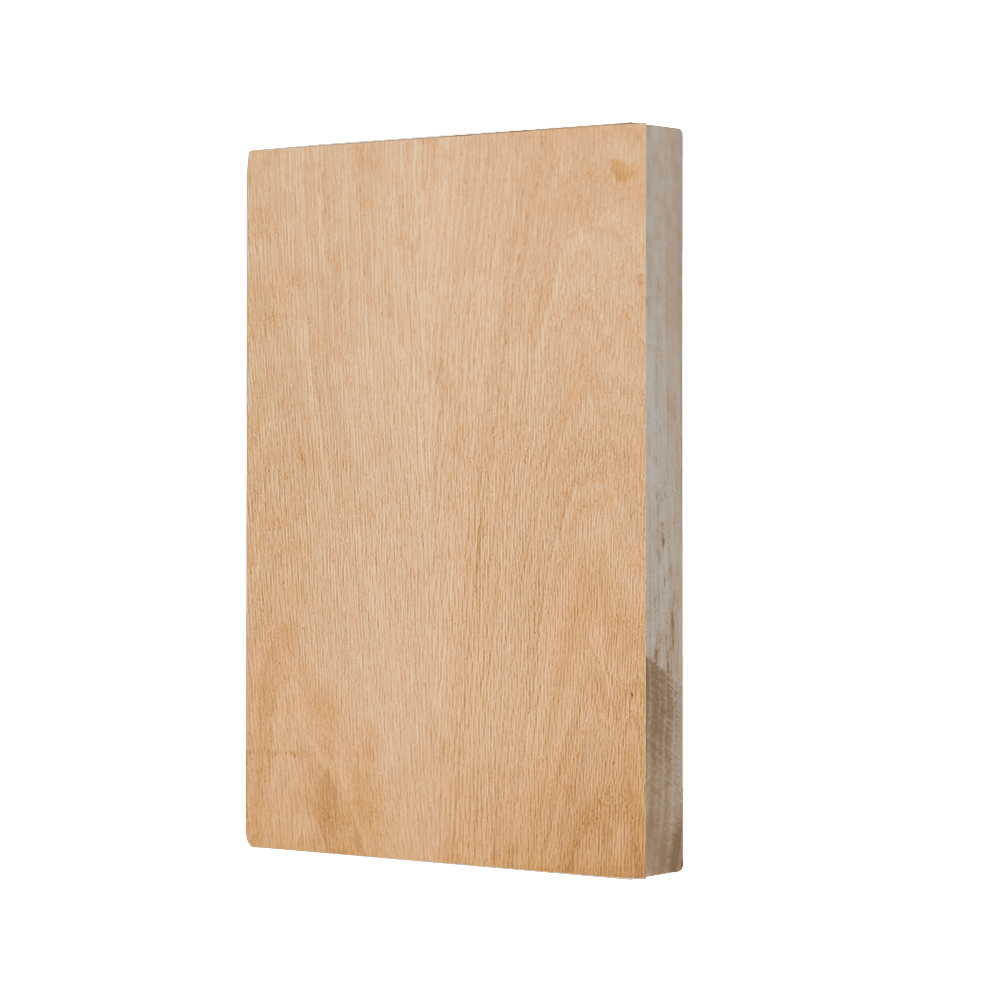
Blockboard is the oldest engineered panel in everyday furniture production and still the most misunderstood. Its core is not fibre and not veneer. It is a bed of solid wood strips, cut from softwood or hardwood, edge-glued side by side, sanded flat, then faced with a veneer skin on both sides. Strip width usually falls between 15 and 30 mm, and that number matters more than most buyers realise.
Each strip carries its own grain direction, and the strips are laid parallel rather than randomly. Because the strips are narrow, internal stresses built up during drying are distributed across hundreds of small pieces instead of one wide board. A solid wood panel 600 mm wide will cup as it equilibrates with room humidity; a blockboard panel of the same width releases that movement at every glue line and stays visually flat.
The face veneer does the cosmetic work and contributes a little to stiffness, but the strips carry the span. Along the strip direction, stiffness is close to solid wood of the same species. Across the strips, the panel is noticeably weaker, which is why a 1200 mm shelf should always be cut with the strips running along the span, never across it.
A three-ply blockboard has one strip core and two veneer faces. A five-ply double-core board adds a cross veneer between two thinner strip beds, and the difference in stability is not subtle. Double-core panels resist twisting over long lengths, hold a flatter face after machining, and tolerate wider humidity swings during shipping. For door blanks and long counter fronts, the extra ply is usually worth the cost.
The core is the weak point. Gaps between strips create hollow zones that read as a soft spot under a fingernail, and a thin veneer pressed over a gap will eventually blister. Cheap strip cores also show "telegraphing", a faint ridge pattern visible under gloss paint. Any blockboard intended for a painted finish should be specified with a calibrated face and a minimum veneer thickness, or covered with a cross band.
The second failure is edge quality. Cut edges expose the strip ends and look rough. Every visible edge needs a lipping of 2 mm or more, glued and trimmed flush. An unlipped blockboard edge will also absorb moisture faster than the face, which is where the first signs of delamination usually appear.
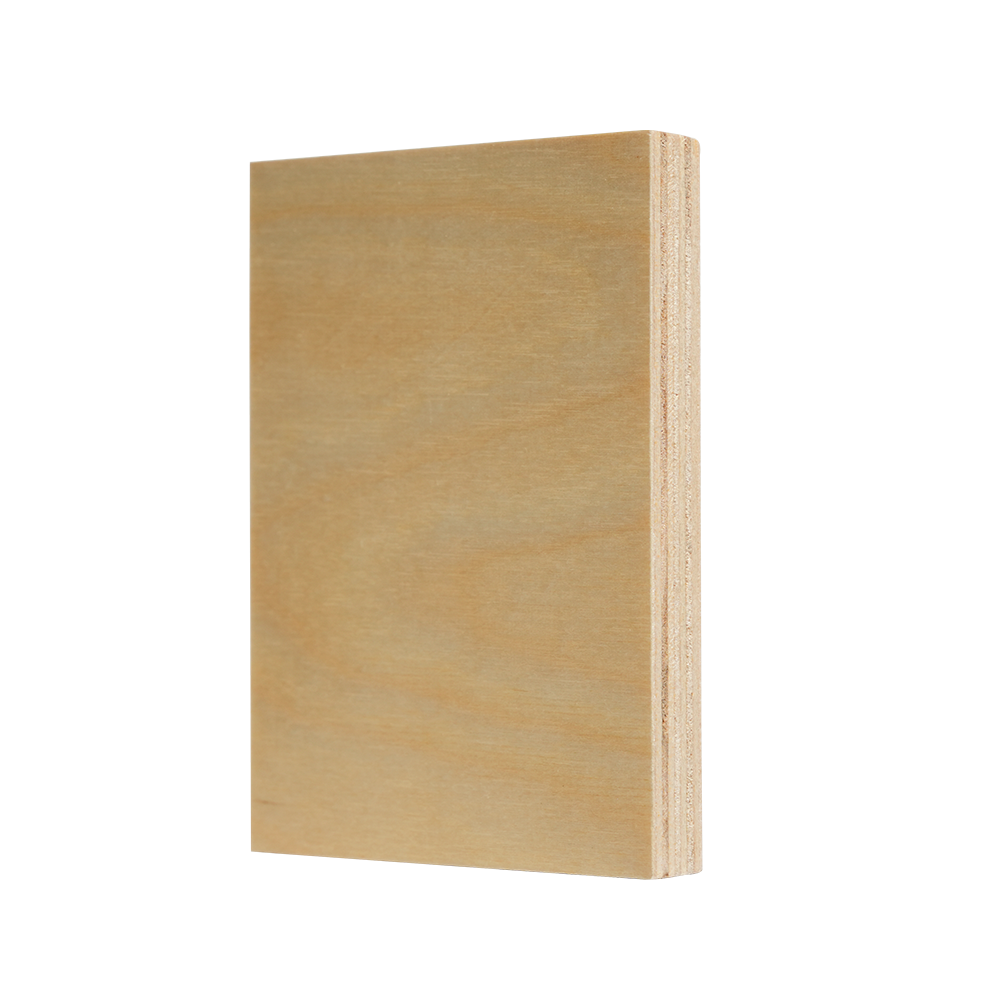
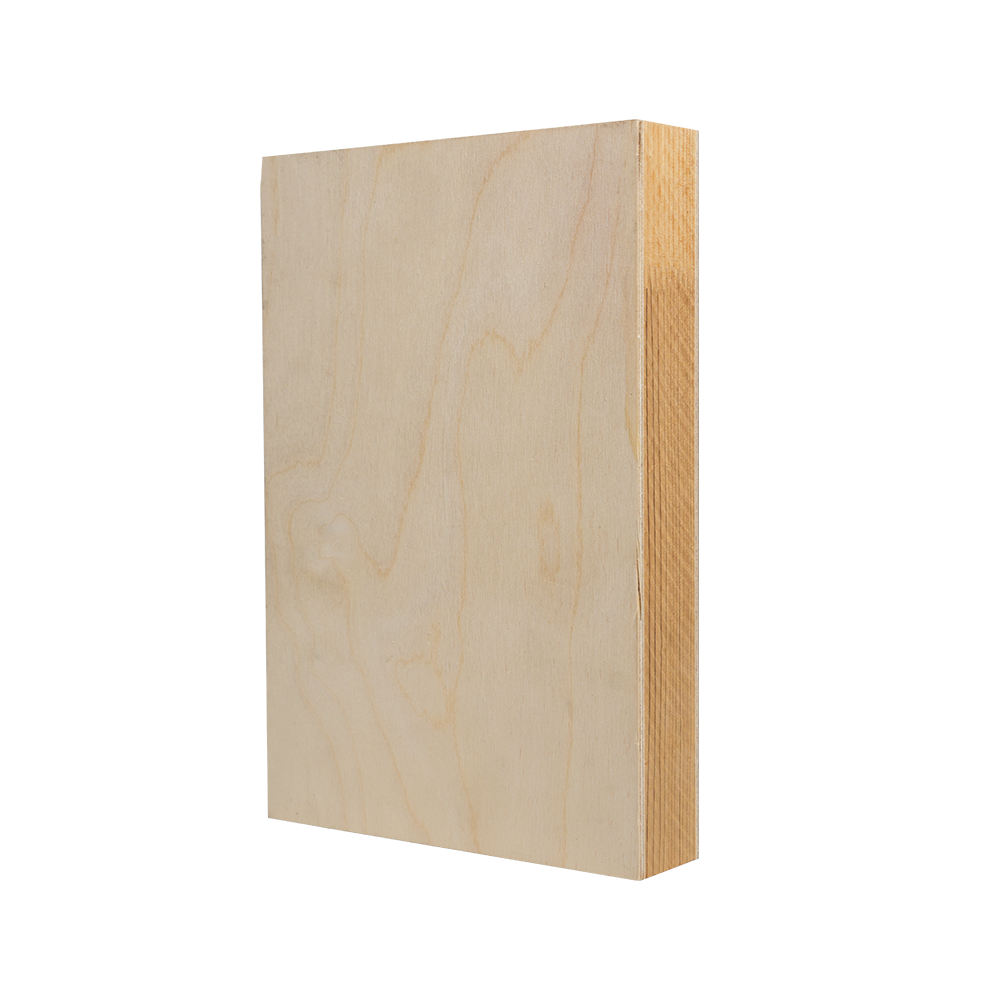 Birch Block Board for Furniture and Door PanelsBirch veneer and carbonized core support furniture, cabinetry and door panels where visible edges need reliable lipping.View Product →
Birch strip cores sit at the denser end of the range, screw cleanly, and take a veneered face without the soft spots that appear in low-grade softwood cores. For projects where the panel is also the finished surface, that density is the difference between a door that stays flat for a decade and one that needs replacing in three years.
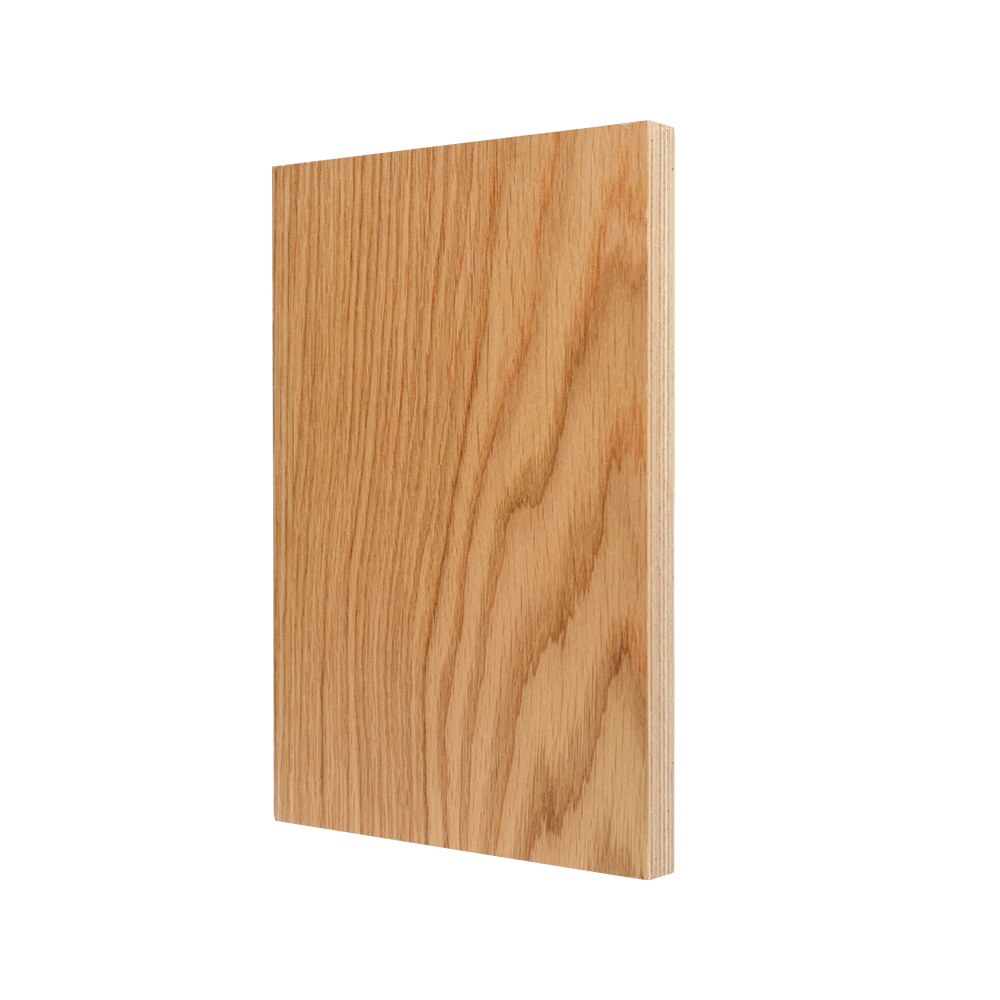
Plywood solves the problem solid wood cannot solve. A tree grows in one direction, so a solid board is strong along the grain and weak across it. Plywood breaks that limitation by stacking thin veneers, rotating each layer about 90 degrees, and bonding the stack under heat and pressure. The result is a panel with strength in two directions, predictable thickness, and a glue line that can be engineered for water resistance.
When a load is applied to a plywood panel, the layers running parallel to the span act in tension and compression while the cross layers hold them in position and prevent buckling. This is why a 12 mm birch plywood shelf will carry more than a 12 mm blockboard shelf of the same span, and why plywood is the default for structural sheathing, mezzanine floors and load-bearing furniture frames.
The ply count matters. A five-ply 12 mm panel behaves very differently from a three-ply 12 mm panel with thick veneers, even at identical thickness and density. Thinner, more numerous veneers distribute stress better, machine more cleanly and hold an edge profile without splitting. When a specification only states thickness, it is incomplete.
The adhesive determines where the panel can live. Interior urea-formaldehyde bonds are adequate for dry furniture. Melamine-urea or phenolic bonds raise moisture resistance. Waterproof phenolic and WBP-class bonds allow exterior use, boat interiors, kitchen carcasses and repeated wetting. Two panels can look identical, weigh the same and carry the same face grade while having very different service lives because of the glue line alone.
Ask for the bond class in writing, then verify by a boil test or a sample soak if the order value justifies it. This single line on a purchase order prevents more claims than any other.
Face grading is normally split between the two sides. A B-BB panel carries a clean face on one side and a small-defect face on the other. A BB-CP panel gives a sound face and a patch-permitted reverse. Grade tells you what you will see after finishing, not what the panel will carry. Buyers who specify a premium face on a hidden component pay for appearance they will never see.
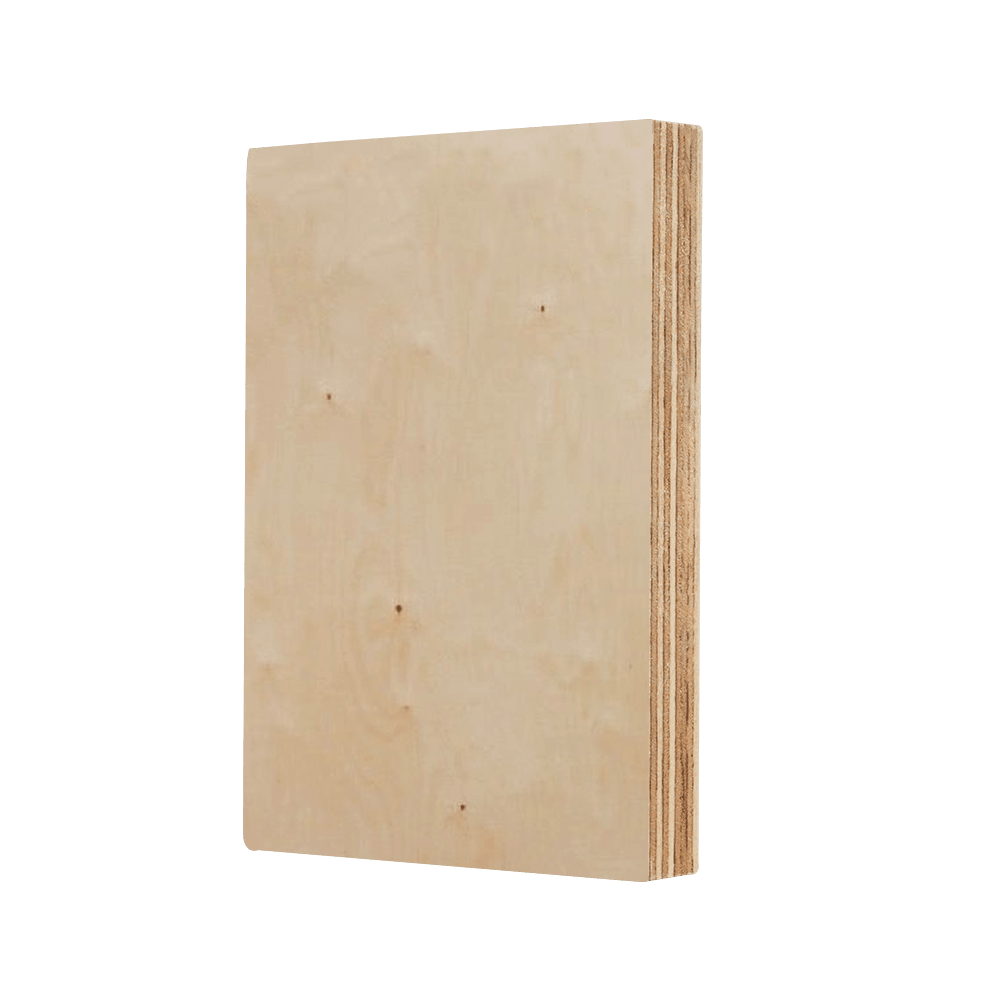
 Top-Grade Birch Plywood with B/BB and S/BB FacesClean birch faces and cross-stacked veneers suit visible furniture and cabinetry, with exterior or interior glue options.View Product →
Top-grade birch panels with a B-BB or S-BB face are the workhorse of visible furniture and cabinetry: tight, even veneers, minimal patching, and a surface that accepts clear lacquer without blotching. Where the face is going to be covered by laminate or veneer, the money is better spent on glue class and ply count.
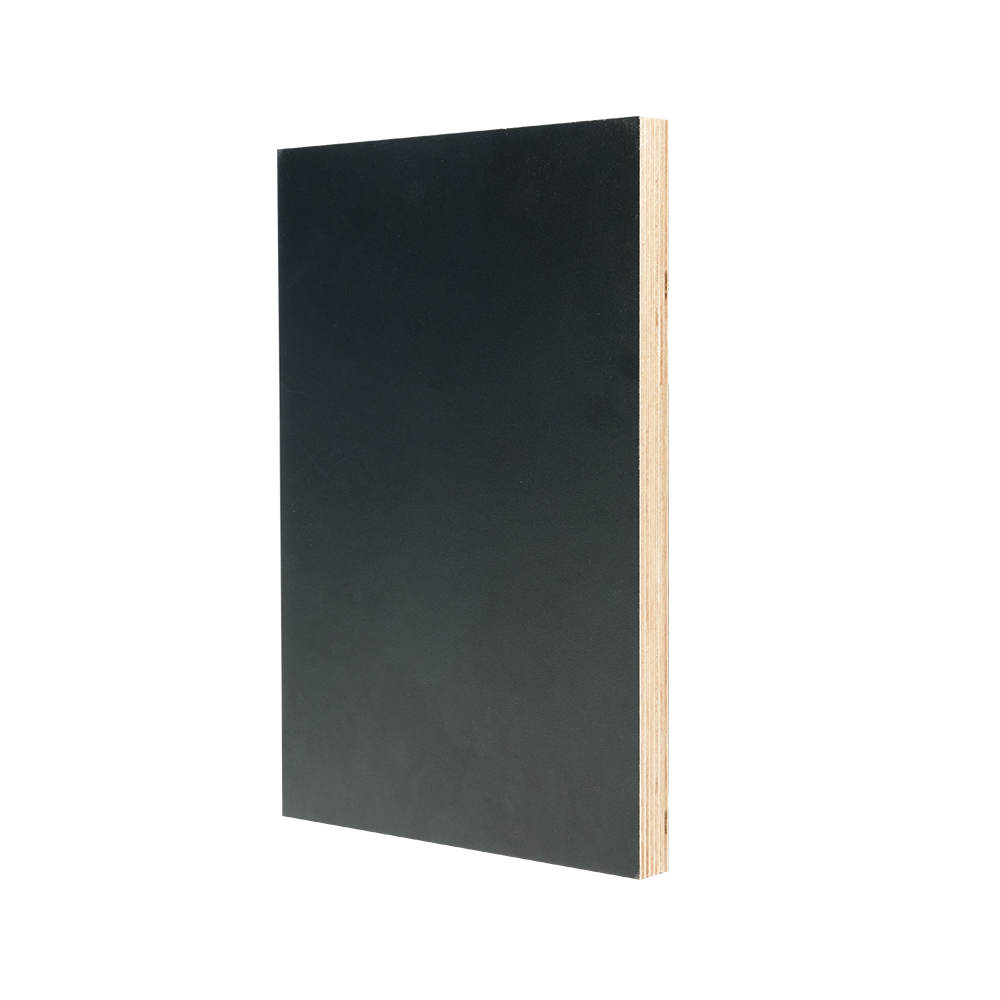
Cut plywood edges show the layer stack, which is either a design feature or a problem depending on the project. Structurally, an exposed edge is an entry point for moisture. Sealing the edge with a two-component primer, a lipping, or edge banding is not cosmetic maintenance; it is what prevents the outer veneer from lifting after a season of humidity cycling. Cross-banded birch plywood used in construction frames is the reference point here, because the same panel is asked to hold a screw, carry load and resist rain splash during the build.
MDF is not a wood panel in the structural sense. Wood is reduced to fibre, blended with resin, formed into a mat and pressed at high temperature until the resin cures. The result has no grain, no voids and no direction. Density typically lands between 700 and 850 kg/m3, which makes it heavy, dense and remarkably consistent from one sheet to the next.
The weakness is water. Standard MDF exposed to moisture swells at the cut edges and does not fully return to its original thickness when it dries. Thickness swell after a 24-hour soak typically reaches 10 to 20 percent in standard grades, and the swollen edge stays swollen. Moisture-resistant MDF reduces the rate of absorption but does not make the panel waterproof. No MDF belongs in a shower surround, a balcony soffit or a formwork application.
The second weakness is screw holding in the edge. A screw driven into the edge of 18 mm MDF, without a pilot hole or an insert, will hold for a while and then strip once the panel has cycled through a few seasons. Cabinet boxes built from MDF usually rely on cam locks, dowels or confirmats rather than edge screws, and hinge plates need machine inserts, not direct screws.
The third is creep. Under sustained load over a long span, MDF continues to deflect. A 1200 mm MDF shelf carrying vinyl records will bow within a year, regardless of how well it was finished. Blockboard or plywood of the same thickness will not.
Designers and buyers rarely argue about definitions. They argue about numbers, so the table below uses the values that most often decide a specification. Treat them as typical ranges for commercial grades rather than laboratory constants.
| Measure | Blockboard | Plywood | MDF |
|---|---|---|---|
| Bending strength, along grain (MPa) | 30-45 | 45-70 in birch | 25-40 |
| Modulus of elasticity (MPa) | 4,000-6,000 | 6,000-9,000 | 2,500-4,000 |
| Screw withdrawal, face (relative) | Good | Very good | Moderate |
| Deflection under long-term load | Low along strips | Low in both directions | High, progressive creep |
| Thickness tolerance, calibrated board | plus or minus 0.5 mm | plus or minus 0.5 mm | plus or minus 0.2 mm |
| Cutting tool wear | Moderate | Moderate to high | High, abrasive dust |
Weight decides hardware, transport and installation labour. A full kitchen of MDF carcasses can weigh two tonnes more than the same kitchen in blockboard, and that difference shows up in the crane booking, the floor loading calculation and the number of installers on site. On a high-rise fit-out, panel weight is a budget line, not a footnote.
Strength is not the only variable in deflection. Span, support spacing, load duration and humidity all change the outcome. A plywood shelf at 1200 mm span with a 30 kg point load behaves comfortably; a blockboard shelf of the same span behaves well if the strips run along the span and poorly if they run across it. A 25 mm MDF shelf at the same span will sag visibly within twelve months.
Plywood cuts cleanly with sharp tooling and a low feed rate, but a dull blade will tear the outer veneer and the repair is visible. Blockboard needs a high tooth count and a support board behind the exit face, because the strip core can chip at the cut line. MDF cuts easily in any direction and produces a large volume of fine dust, which needs extraction rather than a mask and a broom.
Routing is where the three separate completely. MDF routes to a profile that needs almost no sanding before primer. Plywood routes acceptably on straight profiles but can splinter at the edges of a deep cut. Blockboard should not be routed at all beyond a shallow rebate, because the cutter will expose strip ends and create a weak zone.
All three panels need their edges dealt with, for different reasons. Blockboard edges need a lipping to hide the strip ends and to protect against moisture ingress. Plywood edges need sealing to protect the veneer stack, or banding if the edge is visible. MDF edges are porous and absorb paint unevenly, so they need a sanding sealer and often a filler coat before topcoat, otherwise the edge reads dull next to the face.
One rule saves a lot of rework. Decide the finish before you decide the panel. A project that starts with a spray finish and a mid-range blockboard specification will end up paying for extra primer, extra sanding and a higher rejection rate at the finishing shop.
Laboratory values rarely survive a building site. Panels arrive on a truck, sit in a corridor for a week, get cut in a room with no ventilation, and are installed before the plaster has dried. The panel that handles that sequence best is usually the one with the best glue line, not the one with the best brochure.
| Environment | Blockboard | Plywood | MDF |
|---|---|---|---|
| Heated dry interior | Suitable | Suitable | Suitable |
| Kitchen carcass, occasional splash | Suitable with sealed edges | Suitable, use moisture-resistant bond | Marginal, moisture-resistant grade only |
| Bathroom vanity, high humidity | Not recommended | Suitable with WBP or phenolic bond | Not recommended |
| Covered exterior | Not recommended | Suitable with exterior-grade bond and sealed edges | Not suitable |
| Concrete formwork | Occasional light use only | Suitable when film-faced and edge-sealed | Not suitable |
| Floor underlayment | Limited use | Suitable in structural grades | Not suitable for structural underlayment |
Ask the supplier for the moisture content at dispatch, store panels flat on bearers at least 100 mm off the floor, and allow 48 to 72 hours of acclimatisation in the installation space before cutting. Those three habits prevent more failures than any upgrade from one panel type to another.
Material price alone is a misleading comparison, because it ignores waste, finishing labour, hardware and replacement. Birch plywood costs more per cubic metre than blockboard, which costs more than MDF. Once the whole assembly is priced, the ranking often changes.
On a painted wardrobe door, MDF remains the cheaper answer even after the extra primer and sanding, because the material saving outweighs the labour. On a rented commercial fit-out that will be stripped in four years, MDF is again the rational choice. On a fitted kitchen that must survive fifteen years of steam, spills and shifting hardware, plywood usually wins on total cost because it avoids a single callback.
Instead of asking which panel is better, ask which failure mode the project cannot tolerate. Then specify the panel that removes it.
Plywood with a moisture-resistant bond, 18 mm, sealed edges. Failure mode to remove: screw stripping and edge swelling behind the sink run. MDF works only with inserts and a strict no-wet-zone rule.
Blockboard for widths above 600 mm, or a five-ply double core where the door is veneered. Failure mode to remove: bowing and twist. MDF doors are fine up to about 500 mm in dry interiors.
Blockboard with strips running along the span, or thick multi-ply. Failure mode to remove: progressive sag. Keep MDF out of spans above 800 mm carrying real weight.
Blockboard or plywood substrate with a veneered or laminated face, lipped on all visible edges. Failure mode to remove: impact damage and face blistering at joints.
MDF, machined and spray-finished. Failure mode to remove: tear-out and grain rise. Add a moisture-resistant grade if the space is air-conditioned with high humidity swings.
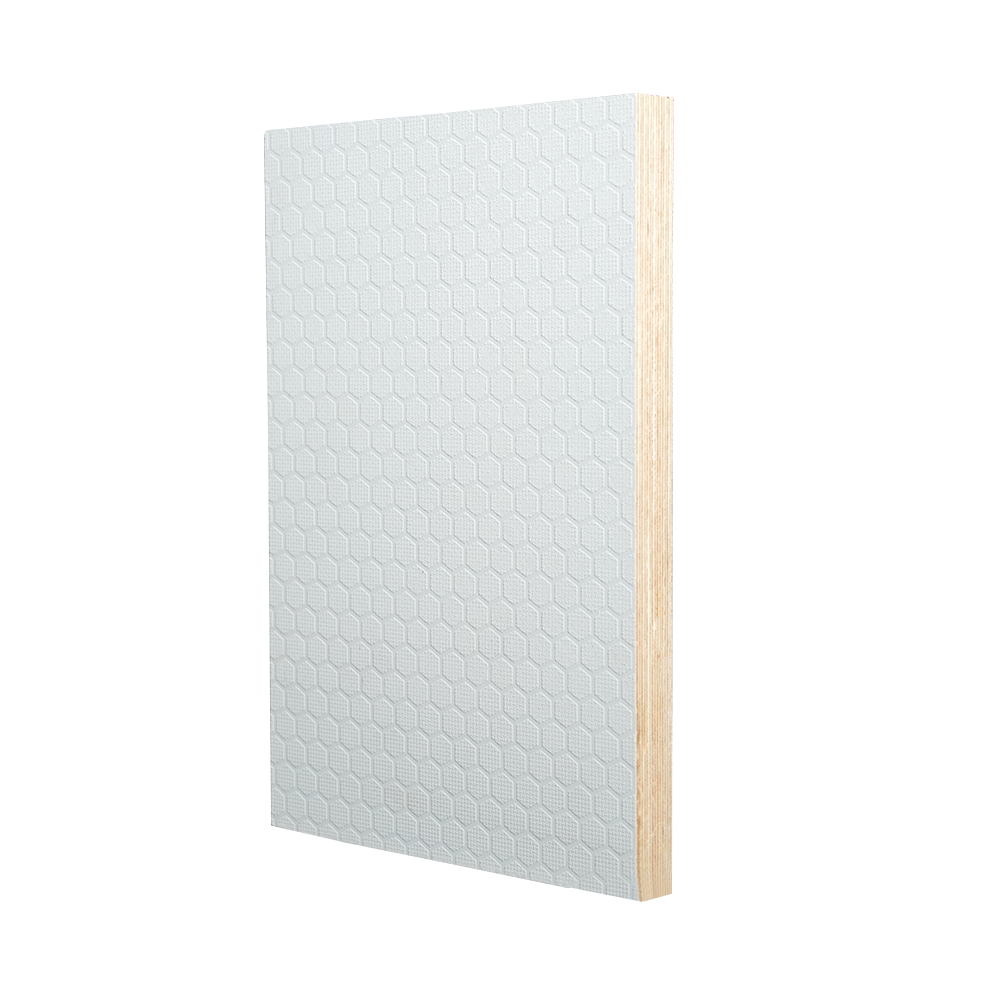
Film-faced plywood with sealed edges and a phenolic bond, reused according to the film wear limit. Failure mode to remove: edge water ingress and film abrasion.
Dense, void-free plywood or a laser-grade birch panel. Failure mode to remove: core voids that telegraph through the cutting rule line.
Perforated or slotted panels on a plywood or blockboard substrate, chosen for flatness over long runs. Failure mode to remove: visible waviness between fixing points.
 Pine Block Board for Cabinets and Door BlanksFinger-jointed pine core offers a practical middle ground for covered wardrobe internals, door blanks and fixture work needing screw holding.View Product →
Pine-core blockboard sits between the light softwood cores and the dense birch cores. It is the practical middle ground for wardrobe internals, door blanks and fixture work where weight matters, screw holding has to be reliable, and the face will be covered anyway. Where the face is the finished surface and the panel will be sanded and lacquered, a denser birch core reduces the risk of soft spots showing through the veneer.
Most disputes are not about which panel type was chosen. They are about which grade of that panel arrived. The checklist below covers the details that decide whether the delivered board matches the approved sample.
Two more habits shorten the approval loop. Keep a sealed reference sample from each batch, and photograph the cut edge of the sample next to a steel rule. When a dispute starts, that photograph usually settles it faster than any argument about grade names.
Along the strip direction, blockboard is stiff and carries load well. Across the strips it is noticeably weaker, and it has no cross-banding to redistribute stress. Plywood is stronger in both directions and is the better choice wherever the load direction is not controlled by the designer.
Only in low-splash positions and only with a moisture-resistant grade and sealed edges. Standard MDF swells permanently at cut edges once water reaches the core, and the swelling does not reverse after drying. Vanity carcasses, shower surrounds and floor-level panels are better served by plywood with a waterproof bond.
Strip cores are glued edge to edge, and a gap between strips leaves a void. Press pressure, strip straightness and glue spread all affect this. Tapping the panel with a knuckle across the full sheet will reveal soft spots before cutting, and a specification that limits strip gaps will prevent them.
For painted shaker doors in a dry kitchen, MDF delivers the cleanest profile and the lowest cost. For veneered doors above 600 mm wide, blockboard or a multi-ply plywood holds flatness better. For doors within a metre of a sink or hob, plywood with a sealed edge is the safer specification.
Not on its own. A 12 mm five-ply birch panel can outperform a 15 mm three-ply panel of the same species because the load is distributed across more glue lines. Thickness improves stiffness, but ply count, core quality and span direction often matter more.
Flat, on bearers at least 100 mm above the floor, in a dry and ventilated space, with the original wrapping kept on until installation. Stacking panels on edge against a wall for a week is one of the most common causes of bow that appears after installation.
Not as a standard product. The strip core and the face veneer respond to moisture at different rates, and the glue lines in most blockboard are interior class. Exterior or semi-exterior work should use plywood with a phenolic or WBP bond and sealed edges.
Moisture-resistant MDF uses a different resin system and slows water absorption, which buys time in a humid room or during a slow build. It does not make the panel waterproof, and it does not stop edge swelling if water sits on a raw cut. Treat it as damage limitation, not as a substitute for plywood in a wet zone.
Plywood in a structural grade, fixed with the correct joist spacing and expansion gaps. MDF and blockboard are poor substrates for tile because both move differently from the tile and the adhesive bed, and both lose integrity if a leak reaches the panel.
Put the specification side by side before the price. Thickness tolerance, ply count, glue class, face grade, moisture content and calibration explain most of the gap between two quotes that look identical on the first line. A lower price with an unstated core quality is not a lower price, it is an unpriced risk.
produse conexe

Copyright © Tianma Lvjian (Nantong) Wooden Structure Technology Co., Ltd. Rights Reserved.